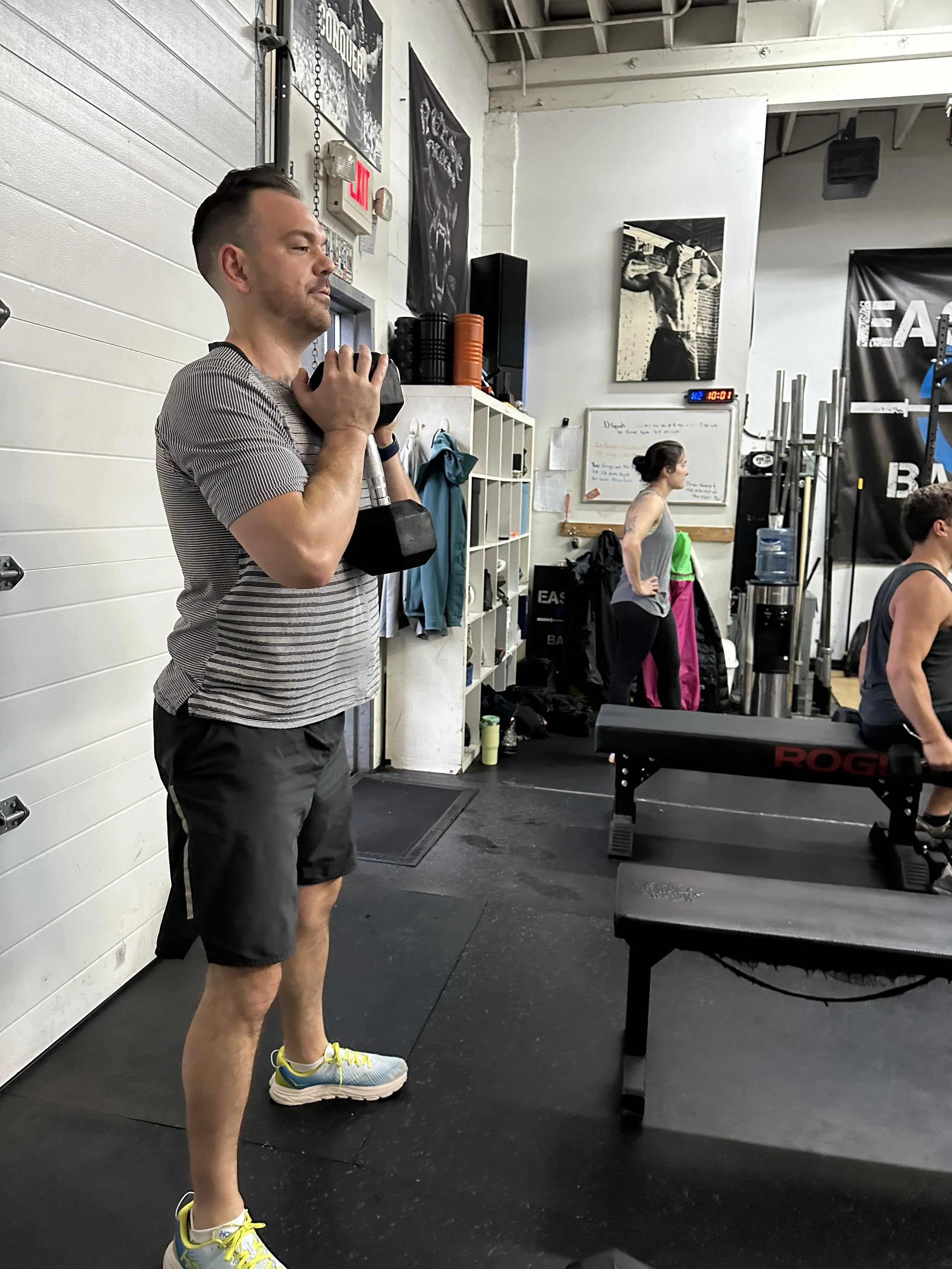
At some point in your 40s, the way you’ve always trained stops working the way it used to. Recovery takes longer. The workouts you used to bounce back from now hang around for a couple days. You’re not imagining it.
Most people respond in one of two ways: they either keep pushing the same way they did at 25, or they back off completely. Both approaches miss what’s actually going on.
This is where strength training after 40 becomes less about doing more, and more about doing things differently. The goal isn’t to work around your body, it’s to understand what’s changed and train accordingly.
With a kinesiology background and years of coaching clients in their 40s and 50s, this is one of the most common transitions I see. And once people adjust their approach, progress usually picks back up quickly.
What Actually Changes After 40
There are a few real physiological shifts worth knowing about. None of them are extreme, but they do change how you should train.
Recovery Slows Down
Muscle repair and recovery processes become slightly less efficient over time. That means you can still train hard but you can’t stack hard sessions the same way you used to.
More specifically, muscle protein synthesis which is the process your body uses to rebuild muscle after training becomes slightly blunted, meaning it takes a bit longer and often requires a stronger stimulus (or better nutrition) to get the same response.
If you ignore this, it shows up as:
Lingering soreness
Plateaued progress
Small injuries that don’t quite go away
The adjustment isn’t to train less, it’s to space things out better and be more methodical.
Hormonal Shifts
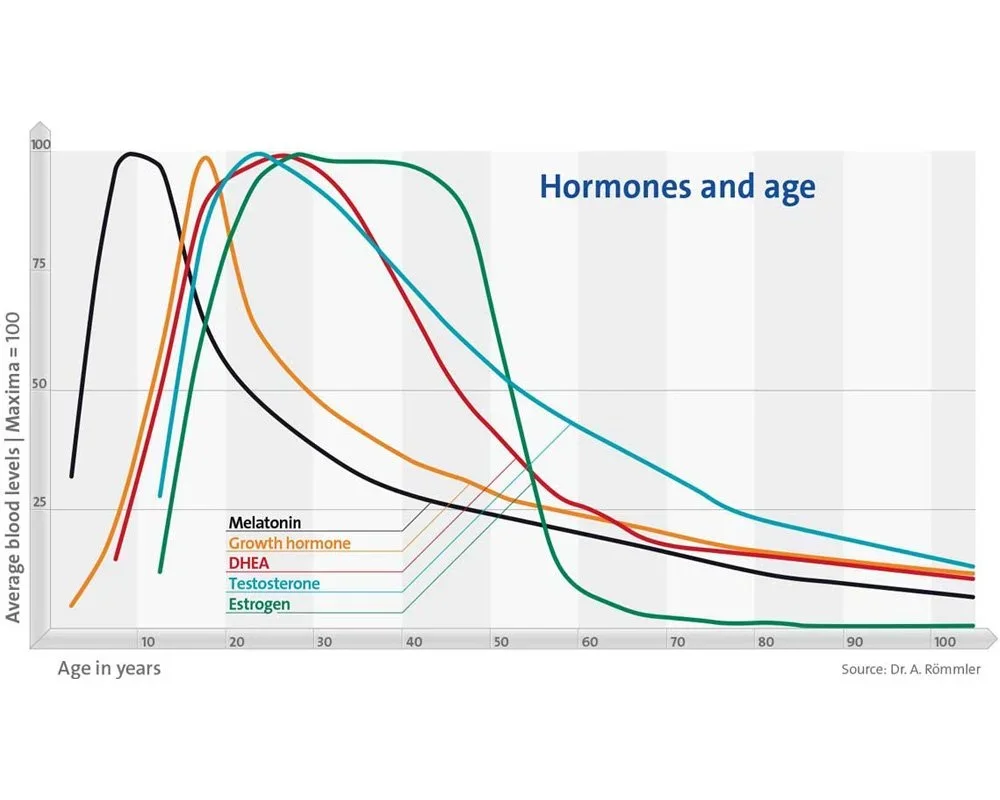
Testosterone and growth hormone gradually decline as you age. These hormones play a role in muscle growth, recovery, and overall energy levels.
On average, testosterone declines roughly 1% per year after your 30s, which doesn’t sound like much, but over time it meaningfully affects how easily you build and maintain lean muscle mass.
That said, strength training is one of the most effective ways to stimulate these hormones and improve how your body uses them. If anything, this makes resistance training more important in your 40s—not less.
Accumulated Wear and Tear
This is usually the most noticeable change.
Joints that felt fine in your 20s might now feel stiff or irritated, especially under heavier load. Hips, shoulders, and lower backs tend to be the most common areas.
Part of this comes from reduced joint lubrication and small changes in connective tissue elasticity, which can make tissues less tolerant to sudden increases in load.
This doesn’t mean avoiding those movements. It means that you should focus on:
Warming up properly
Improving mobility
Choosing variations that fit your body
What Doesn’t Change (And Why That Matters)
The ability to build strength does not disappear after 40.
Research consistently shows that people in their 40s, 50s, and even 70s can build muscle and improve strength with proper resistance training.
In practice, I see this all the time. A client in his mid-40s came in convinced he just needed to “maintain.” Within a few months, he was lifting more than he had in his 30s. Not because of anything extreme, just better structure, better recovery, and consistent effort.
This is why the mindset shift matters.
You’re not trying to hold on to what you have. You’re still capable of improving, it just requires a smarter more diligent approach.
How to Adjust Your Training After 40
This is where most of the results come from.
1. Prioritize Recovery
Two or three quality sessions per week will outperform five sessions where you’re constantly tired.
Give yourself at least a day between hard workouts. Recovery is no longer passive—it’s something you need to plan for.
Sleep, in particular, becomes a bigger lever here since growth hormone release and a lot of tissue repair processes are closely tied to sleep quality and duration. If you want to learn more about how recovery helps your strength gains, have a read at one of our older posts all about this topic.
2. Warm Up Properly
Skipping warm-ups becomes more costly as you get older.
A proper warm-up should:
Increase body temperature
Move joints through range
Prepare the specific muscles you’re about to use for today’s workouts
This usually takes about 10 minutes. It’s one of the easiest ways to reduce injury risk and improve performance.
3. Keep Lifting Heavy (But Adjust Volume)
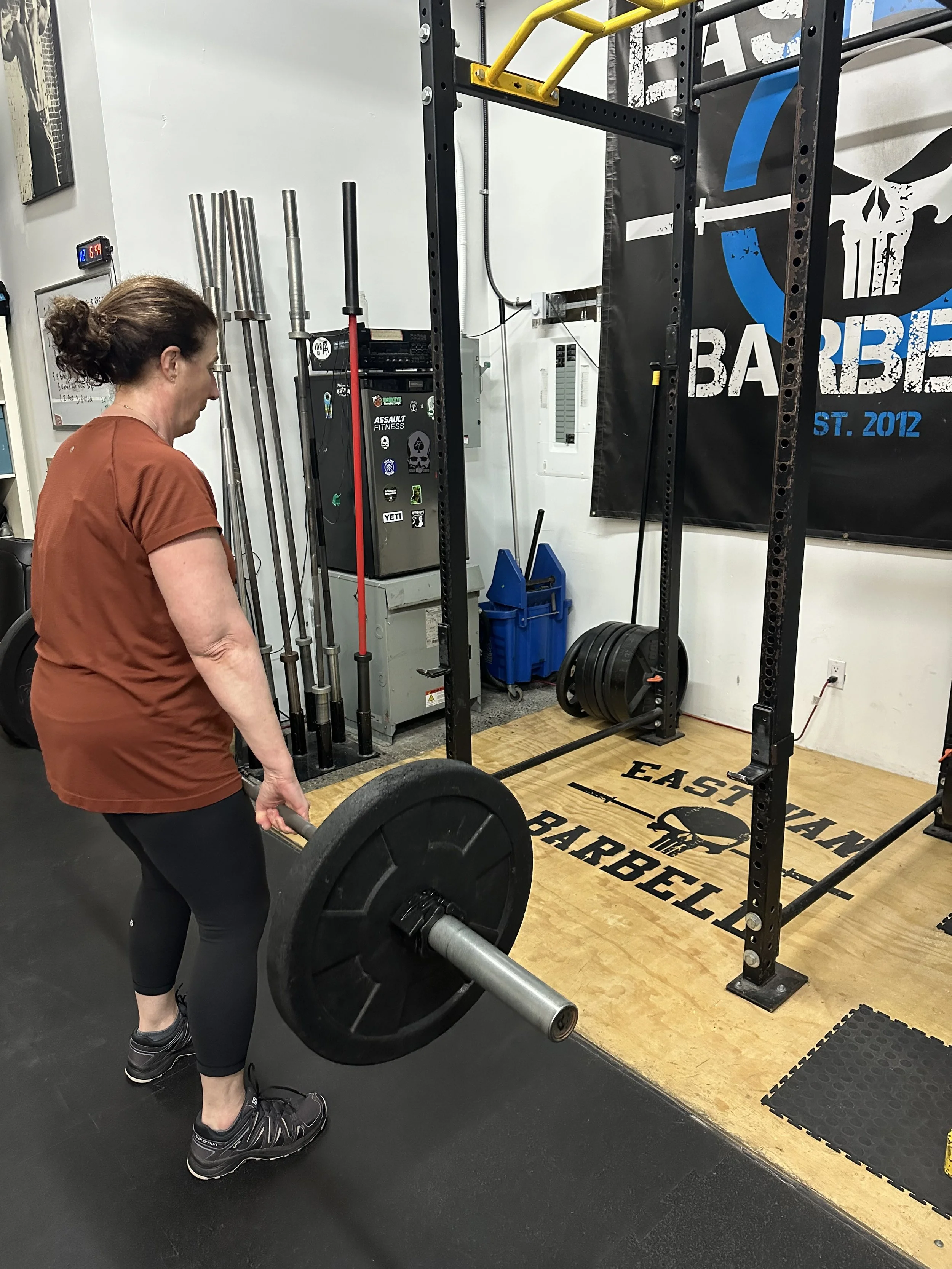
Strength training remains one of the most important things you can do after 40.
It supports:
Muscle mass
Bone density
Metabolic health
Mechanical tension, which is the force placed on muscles during heavier lifting, is still the primary driver of strength and muscle growth, which is why intensity matters more than just doing more reps.
You don’t need to go lighter, but you may need to reduce total volume slightly and focus on quality work instead of quantity.
4. Add Mobility Work
Mobility becomes more important, not less.
Focus on areas that commonly limit movement:
Hips
Thoracic spine
Ankles
This isn’t just about flexibility, it's about maintaining usable range of motion so joints can handle load efficiently and reduce compensations over time.
A Simple Starting Point
If you’re not sure how to structure your training, this is a good place to begin:
Day 1 – Lower Body
Squat variation
Deadlift or hinge pattern
Single-leg work
Day 2 – Upper Body
Press
Row or pull
Carry
Day 3 – Full Body / Lighter
Lighter circuit or conditioning work
Leave at least one rest day between sessions.
Focus on gradual progression over time, adding small amounts of weight or reps consistently rather than trying to push everything at once.
Final Thoughts
Training after 40 doesn’t mean lowering your expectations it just means being more intentional with how you train.
With the right structure, most people in their 40s and 50s end up stronger, more capable, and moving better than they were a decade earlier. The results are still there, you just have to approach things a bit differently.
If you’re in East Vancouver and want a program built specifically for where you are right now, not where you were back at 25, full of youthful energy, you can book a free consultation here!
We will look at your training history, current limitations, and goals, and build something that actually works for you.